
Personal vs Commercial Record: Delivery Driver Violation Points
Get Quotes Based on Your RecordYour Personal Record Holds All Violations, Including Those While Delivering
Every state maintains one driving record per licensed driver. A speeding ticket received while delivering for DoorDash, Uber Eats, or Instacart appears on your personal Motor Vehicle Record (MVR) alongside every other moving violation you've accumulated. No separate commercial record exists for gig delivery drivers.
This matters because your personal auto insurance carrier pulls your MVR at renewal and applies surcharges based on total violations in the lookback window, typically three years. A 15-over speeding ticket logged at 9 PM on a Saturday delivery run triggers the same premium increase as a ticket received driving to the grocery store on Sunday morning. Carriers do not distinguish between on-duty and off-duty violations when calculating risk.
The confusion stems from true commercial driver's license (CDL) holders, who operate vehicles requiring federal certification and whose violations appear on both state MVRs and the FMCSA's Commercial Driver License Information System. Gig delivery drivers hold standard Class D licenses and remain outside the CDL framework. Your personal record is the only record that exists.

Personal Auto Policies Typically Exclude Paid Delivery Coverage
Standard personal auto insurance policies exclude coverage for commercial activity, defined as transporting goods or passengers for compensation. The moment you accept a delivery request and drive to the restaurant, your personal liability and collision coverage may not apply if you cause an accident during that trip.
Most gig platforms provide contingent liability coverage while you have food in your vehicle en route to a customer, but this coverage activates only after your personal policy responds. If your personal carrier denies the claim citing the commercial use exclusion, the platform's contingent policy typically covers third-party damages but leaves your own vehicle repair costs unaddressed unless you carry commercial or rideshare endorsement coverage.
A violation received during a covered delivery trip still appears on your personal MVR and affects your personal policy premium at renewal. The surcharge applies whether the underlying incident occurred during personal use or excluded commercial use. Carriers assess risk based on total violations, not the activity context in which you received them.

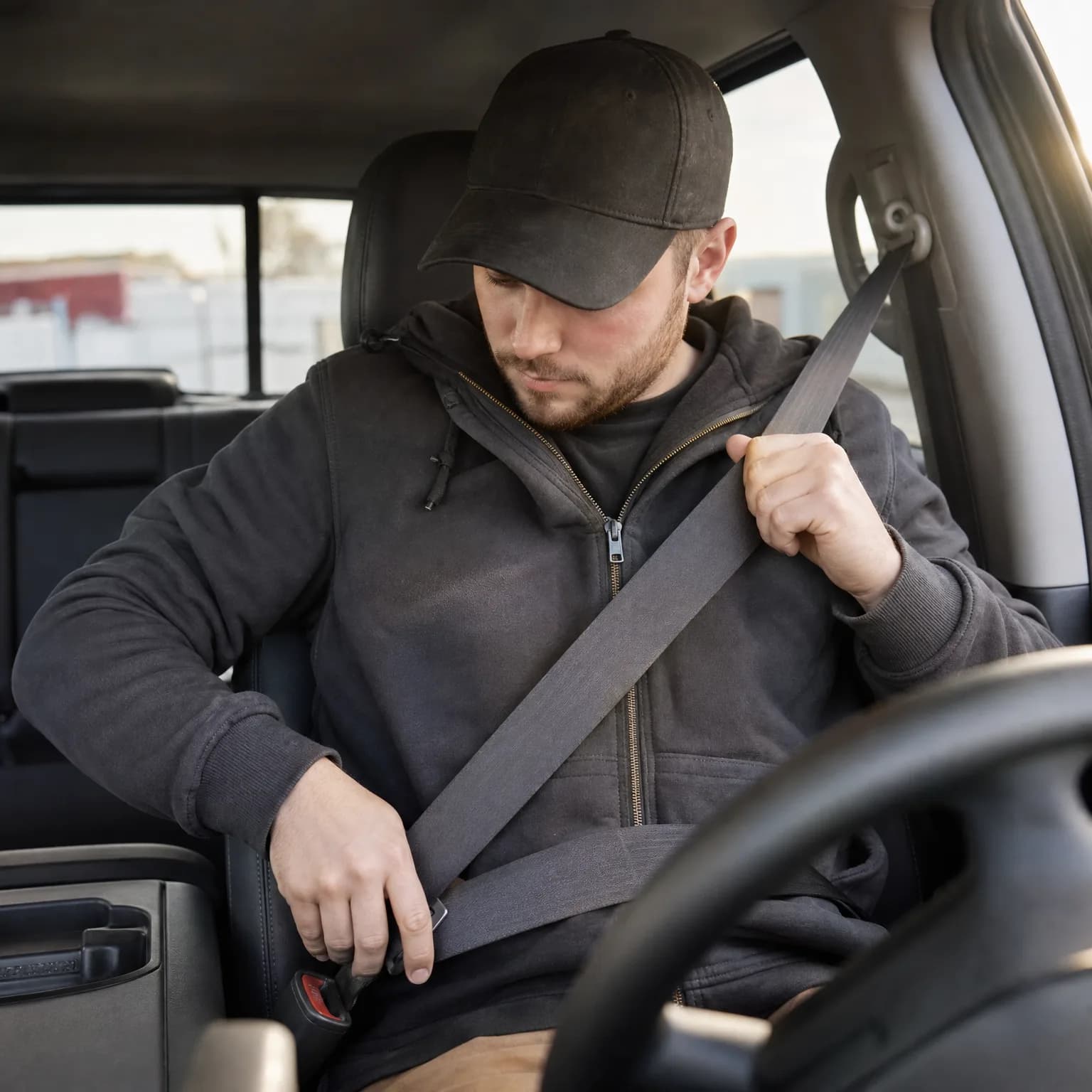
How Violations While Delivering Affect Your Personal Insurance Rate
A first moving violation typically increases personal auto premiums 15 to 30 percent for three years, the standard surcharge window most carriers apply. A speeding ticket of 1-15 mph over the limit usually adds 2 to 3 points on your MVR in states using point systems, and insurers apply their own internal surcharge schedules based on violation severity and your prior record.
If you already carry one prior violation, a second ticket within three years compounds the surcharge. Two speeding tickets often trigger a 40 to 60 percent increase compared to a clean-record baseline, and some preferred carriers reclassify multi-violation drivers into standard or non-standard rate tiers with significantly higher premiums. Drivers in non-standard markets already pay elevated rates, and an additional violation while delivering can push monthly premiums above $200 in many states.
The timing of your violation relative to your policy renewal date determines when the surcharge takes effect. Carriers discover new violations when they pull your MVR at renewal, typically annually. A ticket received one month after renewal may not affect your rate for 11 more months, but once the carrier applies the surcharge at the next renewal, it persists for three full years from that renewal date under most surcharge schedules.
Adding Rideshare or Commercial Endorsement Coverage
Rideshare endorsements, originally designed for Uber and Lyft drivers transporting passengers, also cover food and package delivery in most states. These endorsements cost $10 to $30 per month depending on carrier and state, and they eliminate the commercial use exclusion that would otherwise leave you uninsured during paid delivery trips.
Not all carriers offer rideshare endorsements, and availability narrows further for drivers with violations on record. State Farm, Allstate, and Progressive write rideshare policies in most states, but underwriting guidelines vary. A driver with two speeding tickets within three years may find rideshare endorsement options limited to non-standard carriers charging $40 to $60 monthly for the add-on.
Full commercial auto policies remain available but cost significantly more than rideshare endorsements. Commercial policies provide higher liability limits and broader coverage but typically start at $150 to $250 per month for gig delivery use. Drivers with pointed records already facing elevated personal rates may find the combined cost of a commercial policy prohibitive compared to the earnings from part-time delivery work.

Get a Rate That Matches Your Record Today
Get Quotes Based on Your Record
Platform Background Checks and Ongoing Monitoring
DoorDash, Uber Eats, Instacart, and similar platforms run initial MVR checks before approving drivers and conduct annual re-checks thereafter. Each platform sets its own violation threshold, but most disqualify drivers with three or more moving violations in the past three years or any single major violation such as reckless driving, DUI, or leaving the scene of an accident.
A speeding ticket received while delivering does not immediately disqualify you from the platform, but it moves you closer to the violation threshold applied at your next annual background check. A driver approved with one prior ticket who receives a second ticket while delivering will show two violations at the next check. A third violation within the three-year window typically results in platform deactivation.
Platforms do not notify you when they discover a new violation on your MVR. You learn of the issue only when your account is deactivated following the annual re-check. At that point, the violation remains on your record for the full state retention period, typically three to five years from the conviction date, and you must wait until older violations drop off before reapplying.

Point Removal and Rate Recovery Timeline
Most states allow drivers to remove points by completing a state-approved defensive driving course, but the eligibility rules vary. Some states permit one course every 12 or 24 months, others limit point removal to first-time offenders, and a few states do not offer point reduction at all. Completing the course removes points from your DMV record but does not automatically erase the underlying conviction.
Insurance carriers base surcharges on convictions, not points. Removing points from your MVR improves your standing with the DMV and may delay or avoid a points-based license suspension, but your insurer will continue applying the surcharge for the full three-year period unless you request a re-rate and your carrier's underwriting guidelines allow credit for course completion. Most carriers do not adjust rates mid-term, so you must wait until renewal to see any benefit.
The fastest path to rate recovery is waiting for the violation to age off your carrier's surcharge window. After three years from the conviction date, most insurers stop applying the surcharge at the next renewal. Your rate returns to the clean-record baseline assuming no new violations appear during that window. Drivers who accumulate multiple violations while delivering extend the surcharge period, as each new ticket resets the three-year clock.
Comparing Carriers After a Delivery Violation
Carriers vary widely in how they price violations, and the spread widens for drivers with delivery-related tickets on record. GEICO and Progressive typically offer more competitive rates for one-violation drivers than State Farm or Allstate, but a second violation often shifts the advantage. Non-standard carriers such as The General, Bristol West, and Acceptance Insurance specialize in multi-violation drivers and may quote lower premiums than standard carriers once you cross the two-violation threshold.
Rate shopping after a violation requires full disclosure of the ticket and your delivery activity. Withholding information about paid delivery use or an unreported violation constitutes misrepresentation and gives the carrier grounds to deny claims or cancel your policy. Request quotes that include rideshare or commercial endorsement coverage if you plan to continue delivery work, and compare the total monthly cost including the endorsement across carriers.
Your current carrier may not offer the best rate after a violation, even if they provided competitive pricing when you had a clean record. Carriers specialize in different risk profiles, and a violation changes your profile. Plan to compare at least three quotes at each renewal for the three years following the ticket to capture rate changes as the violation ages and your carrier's surcharge schedule adjusts.
Frequently Asked Questions
Does a speeding ticket while delivering food go on a separate commercial record?
No. Every violation appears on your single personal driving record (MVR). States do not maintain separate commercial records for gig delivery drivers who hold standard Class D licenses. Your personal auto insurer sees all violations regardless of whether they occurred during delivery work or personal use.
Will my personal car insurance cover an accident while I'm delivering?
Most personal policies exclude coverage during paid delivery. Gig platforms provide contingent liability coverage while food is in your vehicle, but this activates only after your personal policy responds. Without a rideshare or commercial endorsement on your personal policy, your collision and comprehensive coverage typically will not pay for damage to your own vehicle during a delivery trip.
How much does a delivery violation increase my personal auto insurance rate?
A first speeding ticket typically raises premiums 15 to 30 percent for three years. A second violation within three years often compounds the increase to 40 to 60 percent, and some carriers reclassify multi-violation drivers into higher-cost standard or non-standard tiers. The surcharge applies at your next policy renewal after the carrier discovers the ticket on your MVR.
Can I remove points from a delivery violation by taking a defensive driving course?
Most states allow point removal through approved courses, but eligibility and frequency limits vary. Removing points helps avoid DMV suspension but does not automatically erase the conviction. Insurance carriers base surcharges on convictions, not points, so you must request a re-rate at renewal and confirm your carrier allows credit for course completion before expecting a premium reduction.
Will DoorDash or Uber Eats deactivate me after one speeding ticket?
One speeding ticket typically does not trigger immediate deactivation. Most platforms disqualify drivers with three or more moving violations in the past three years. Platforms conduct annual MVR re-checks, and deactivation occurs only after the background check discovers you have crossed the violation threshold.
Related Articles
CDL Personal Vehicle Ticket: Insurance & Record Impact
5/18/2026
Company Vehicle Violations: Your Personal Record Impact
5/18/2026

Rideshare Violation: Personal vs Platform Record Impact
5/18/2026
CDL Renewal After Personal-Vehicle Violation
5/18/2026

Personal License Points and CDL Disqualification Rules
5/18/2026
CDL Personal Speeding Ticket: Employer Disclosure Rules
5/18/2026