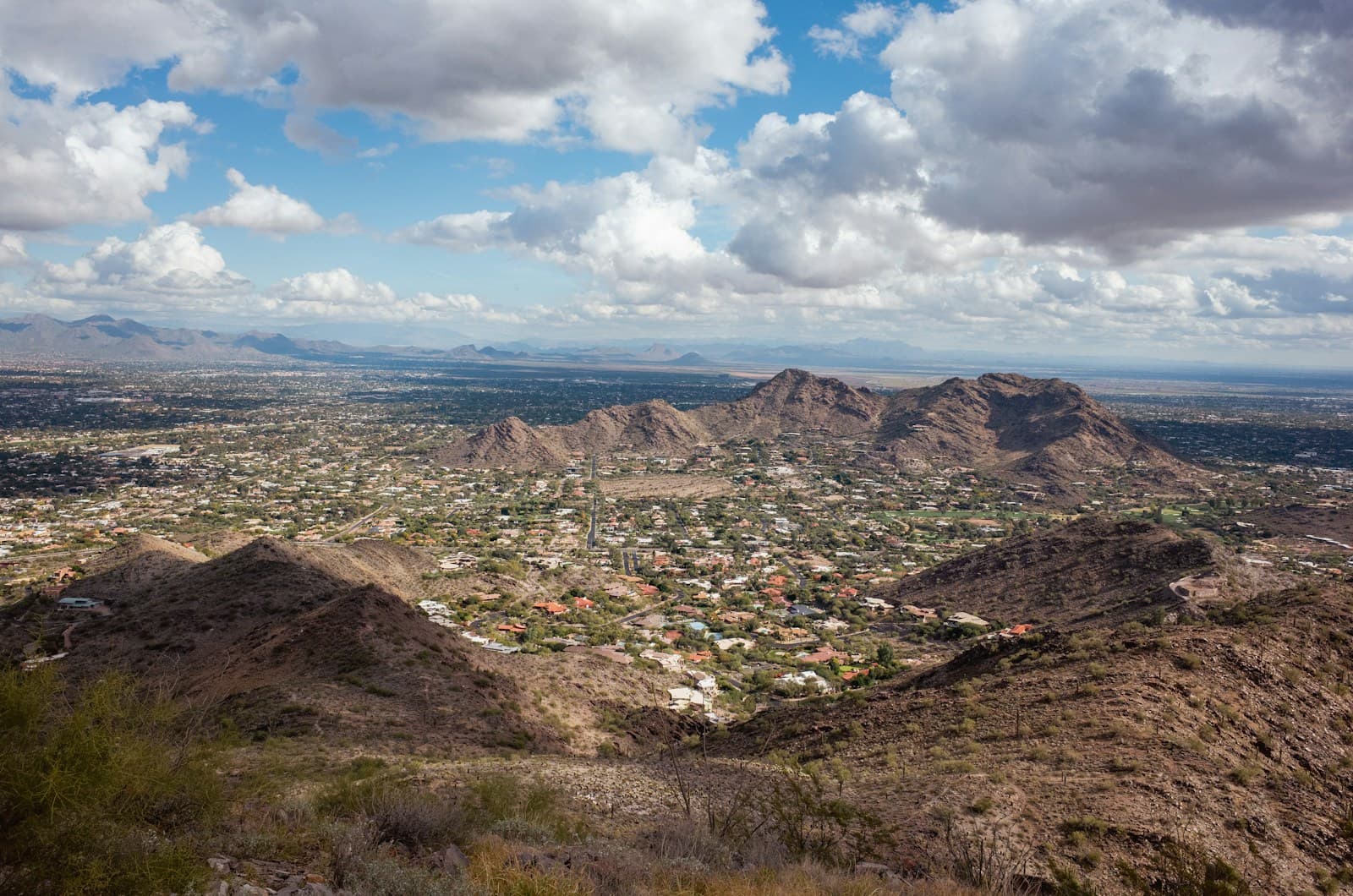
What Affects Rates in Scottsdale
- Loop 101 and Scottsdale Road Collision Frequency: Scottsdale's arterial corridors—particularly Loop 101 through the city and Scottsdale Road—see elevated accident frequency due to tourist traffic, resort-area congestion, and high speeds. High-risk drivers face steeper comprehensive and collision premiums in zip codes bordering these routes, as insurers weight recent accident density when pricing non-standard policies.
- Affluent Neighborhoods and Repair Costs: North Scottsdale's concentration of luxury vehicles in areas like DC Ranch and Silverleaf drives up average claim costs citywide. For high-risk drivers, this means collision coverage can cost 20–40% more than in neighboring Mesa or Tempe, as insurers price for the vehicles you're likely to hit, not just your own.
- Seasonal Population Surge: Scottsdale's winter visitor influx increases traffic density from November through April, raising collision risk during peak snowbird season. Carriers writing high-risk policies here factor this seasonal exposure into annual premiums, even if your violation occurred outside these months.
- DUI Enforcement Concentration: Scottsdale Police Department maintains visible DUI enforcement in Old Town and the Entertainment District, with sobriety checkpoints common on weekend nights. Drivers with existing DUI-related SR-22 filings face minimal rate relief until the full 3-year period closes, as carriers view repeat-risk geography as a persistent rating factor.
- Non-Standard Carrier Availability: Scottsdale has robust access to non-standard carriers operating statewide—including regional specialists that write post-DUI policies standard carriers decline. Shopping among 4–6 non-standard options in this market can yield rate spreads of $80–$150/month for identical coverage, as appetite for specific violation types varies widely.

Compare rates from carriers that work with drivers who have points
Standard carriers surcharge heavily after violations. These specialists price your specific record differently.
Get Your Free QuoteCoverage Recommendations
Cost estimates are based on available industry data and vary by driver profile. These are not insurance quotes.
Liability Insurance
Arizona requires 25/50/15 minimums, but high-risk drivers in Scottsdale should consider 50/100/25 or higher due to the city's elevated median vehicle values and injury claim costs. Liability-only SR-22 policies start around $120–$200/month post-DUI, depending on violation recency and age.
$120–$280/mo for 25/50/15 to 100/300/50Estimated range only. Not a quote.
Full Coverage
Full coverage (liability + collision + comprehensive) for high-risk drivers in Scottsdale typically runs $200–$400/month, with financed vehicles requiring it regardless of driving record. North Scottsdale zip codes see the highest collision premiums due to repair cost exposure and traffic density on Loop 101.
$200–$400/mo post-violationEstimated range only. Not a quote.
Non-Standard Auto Insurance
Non-standard carriers dominate post-DUI and post-suspension placements in Scottsdale, often as the only option for drivers within 12 months of a major violation. These policies cost 60–120% more than standard rates but provide the continuous coverage needed to satisfy SR-22 filing requirements and avoid license re-suspension.
$150–$350/mo typical rangeEstimated range only. Not a quote.
Uninsured Motorist Coverage
With Arizona's uninsured driver rate near 12%, UM/UIM coverage protects high-risk drivers who've already paid heavily for one incident and can't afford another uncovered loss. Adding 25/50 UM typically costs $15–$35/month extra on a non-standard policy in Scottsdale, a modest increase for meaningful protection.
$15–$35/mo for 25/50 UM/UIMEstimated range only. Not a quote.