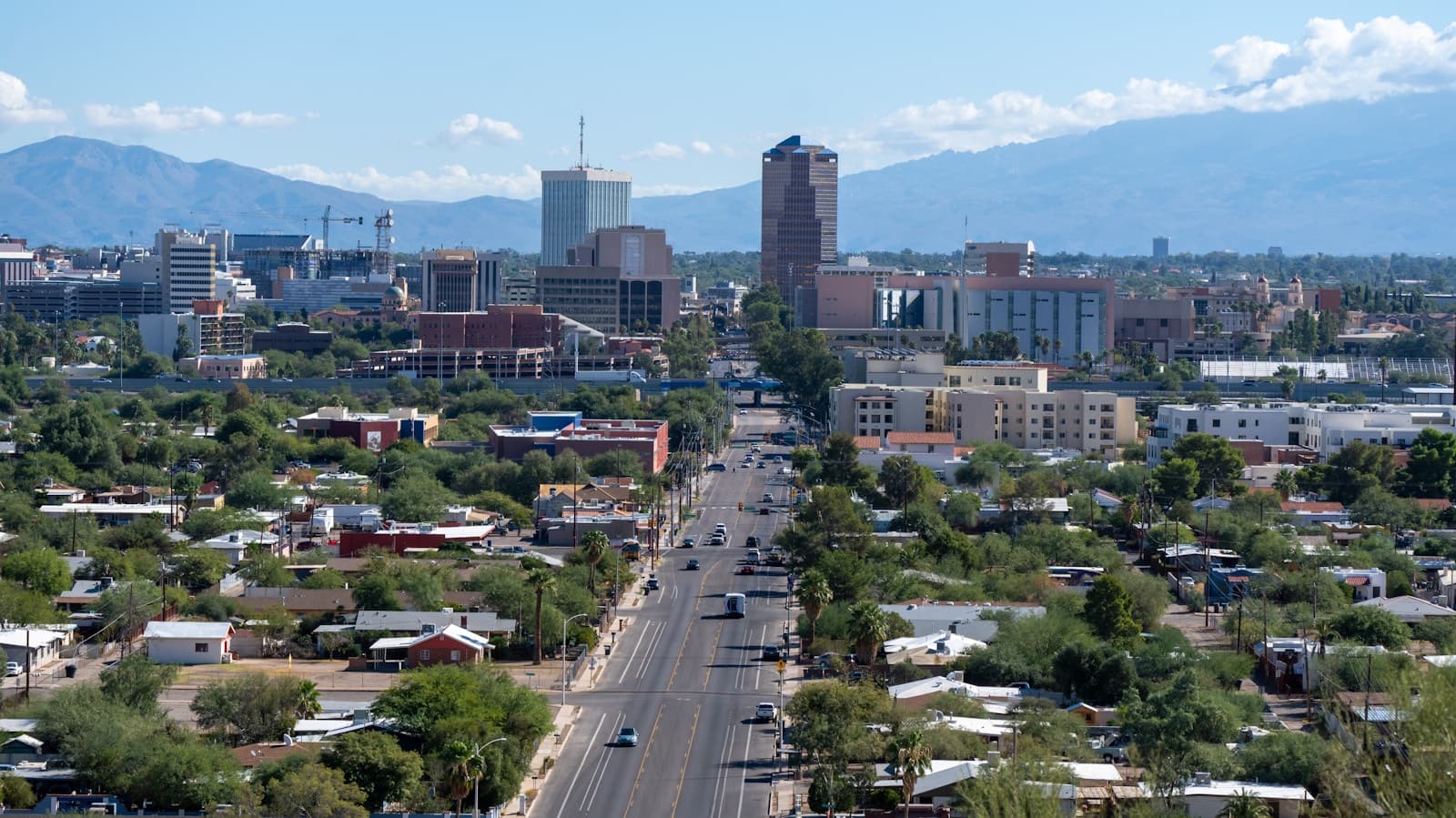
What Affects Rates in Tucson
- I-10 Corridor Accident Concentration: Interstate 10 through Tucson sees elevated accident frequency, particularly near the I-19 interchange and downtown sections. High-risk drivers with at-fault accidents already on record face steeper increases when living or commuting in ZIP codes along this corridor — carriers price zip-level claim density into their non-standard tiers.
- Arizona Uninsured Driver Rate: Arizona typically reports uninsured motorist rates near 12%, among the higher rates in the Southwest. For high-risk drivers already paying elevated premiums, uninsured motorist coverage becomes critical — a second at-fault claim or hit from an uninsured driver can push you into assigned risk pools with monthly premiums exceeding $400.
- Monsoon Season Claims Spike: July through September brings heavy monsoon storms, flash flooding, and dust storms that temporarily reduce visibility to near zero on Tucson roads. Comprehensive claims spike during this period — high-risk drivers considering liability-only should weigh the seasonal weather risk against the cost of adding comprehensive, typically $30–$70/month more in non-standard markets.
- Pima County Court SR-22 Processing: SR-22 filings triggered by DUI convictions in Pima County Superior Court require coordination between your insurer and the Arizona Motor Vehicle Division. Lapses in coverage trigger immediate license suspension — non-standard carriers with direct MVD filing systems reduce the gap between payment and proof, critical when you're one missed payment from losing your license.
- Border Proximity and Out-of-State Claims: Tucson's proximity to Mexico means some drivers with violations have cross-border driving histories. Most U.S. non-standard carriers will not cover incidents in Mexico, and accidents or violations recorded in Mexico may still appear in underwriting — clarify your coverage territory and whether your SR-22 policy extends beyond Arizona state lines.
Compare rates from carriers that work with drivers who have points
Standard carriers surcharge heavily after violations. These specialists price your specific record differently.
Get Your Free QuoteCoverage Recommendations
Cost estimates are based on available industry data and vary by driver profile. These are not insurance quotes.
SR-22 Insurance
SR-22 is not insurance — it's a certificate your insurer files with the Arizona MVD proving you carry at least state minimum liability (25/50/15). In Tucson, non-standard carriers like The General, Bristol West, and Acceptance specialize in writing policies that include SR-22 filing, typically adding $15–$50 to your total cost. Any lapse triggers immediate suspension.
$15–$50 filing fee + higher premiumsEstimated range only. Not a quote.
Liability Insurance
Arizona requires 25/50/15 minimums, but high-risk drivers in Tucson should consider 50/100/25 or higher — a second at-fault accident with minimum coverage can leave you personally liable for damages exceeding your policy limit, and non-standard carriers often price higher limits at marginal increases of $20–$40/month.
$150–$250/mo for state minimumsEstimated range only. Not a quote.
Full Coverage
Full coverage (liability + collision + comprehensive) in Tucson's non-standard market typically runs $300–$500/month for drivers with DUIs or major violations. If your vehicle is financed or worth more than $5,000, lenders require it — but if you own an older car outright, dropping collision can cut your premium by 30–40% while keeping you legal with liability-only SR-22.
$300–$500/mo after DUIEstimated range only. Not a quote.
Uninsured Motorist Coverage
With Arizona's uninsured driver rate near 12%, uninsured motorist (UM) coverage protects you when an at-fault driver has no insurance. In Tucson's high-risk market, UM adds $15–$40/month but can prevent a total loss if you're hit by an uninsured driver — especially important if you're already one violation away from assigned risk status.
$15–$40/mo added costEstimated range only. Not a quote.